
Lovable payments just went public. I have been building with it in beta for weeks, and I want to be honest about what that actually looked like.
Beta does not mean sandbox. I was running this in production with real transactions and real customers before today’s announcement. The launch post looks clean. The demo looks smooth. The reality was an empty database, a ghost system, and real customers who paid for something and got nothing.
There is a specific kind of panic that hits when you realize the product you just showed the world does not actually work.
Not “there is a bug” panic. The other kind. The kind where you open your database, look for the row that should say “access granted,” and find nothing there. An empty table staring back at you while somewhere, someone just handed you real money.
That happened to me.
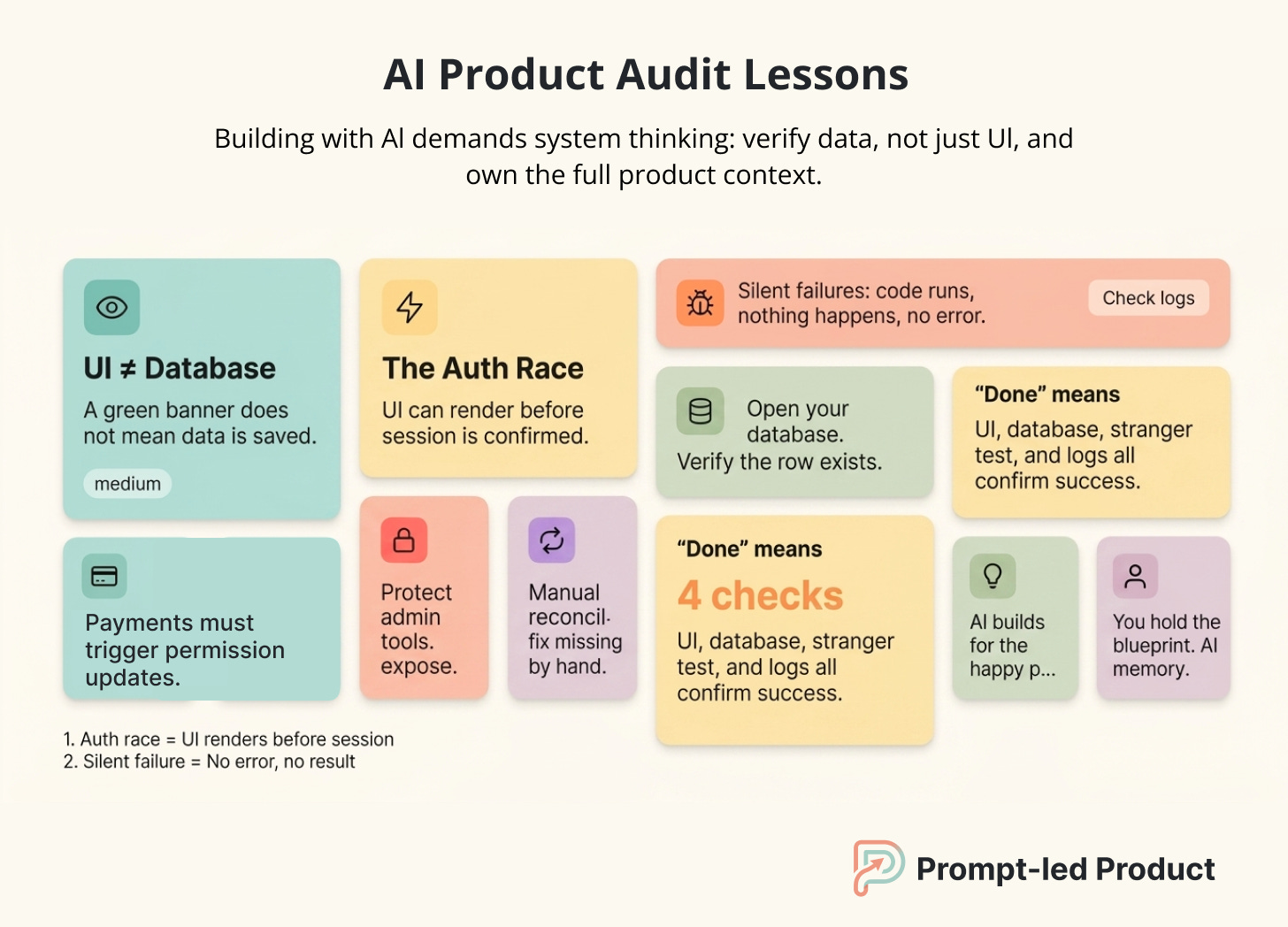
The Vault was live. The pricing page was up. The checkout flow looked clean. A green success banner appeared after payment. A toast notification popped up. The UI was celebrating. And the database had not written a single row.
I had built something beautiful from the front and hollow behind it.
This is Part 4 of how I am building promptledproduct.com in public with Lovable and AI agents as my engineering team. This one is about what happens when you trust the UI too much and stop checking the backend.
Check the rest of the Build Series. Part 1 — Part 2 — Part 3
What I Thought Was Working
By the end of Part 3, the Vault was live. The search was pulling blueprints. Paid subscribers could authenticate with a magic link and browse 62 (now 71) audited patterns.
Then I opened Paddle. Real payment processor, real money, real transactions.
And then I opened Supabase:
The
authorized_emailstable was empty.The
audit_purchasestable was empty.
Every transaction that had gone through existed in Paddle. None of them existed in my app.
The payments were landing. The permissions were not. That’s why building with Al demands system thinking: verify data, not just Ul, and own the full product context.