
Why Software Is Replacing the Static Lead Magnet
If your strategy for validating a feature is to track whitepaper downloads, you are measuring vanity, not utility. It is time to start building engines.

If you are a Product Manager, your biggest risk is spending six months building a feature that nobody uses.
Most PMs try to mitigate this risk with user interviews, surveys, and landing pages. They write whitepapers to “test interest.” But tracking a download only tells you that your headline was good. It tells you nothing about whether your product logic actually solves a problem.
Hiding your logic inside a forty page PDF is a graveyard for your best ideas. You are giving your audience homework they will never finish.
In 2026, information has zero gravity.
If a user can paste your article URL into a chat and get the highlights instantly, you have no leverage. For a PM, this is a critical GTM failure.
If your strategy for validating a new feature is to write a whitepaper and track downloads, you are measuring vanity, not utility. You are not learning how users interact with your logic. You are just learning who is good at clicking a download button. The era of the static lead magnet is dead.
Leading strategists like Michael Simmons and Claudia Faith are calling this the era of Prompt Leadership. The real value has moved from providing information to providing immediate capability. Your job is to reduce the distance between a user’s problem and your product’s solution.
A PDF increases that distance. An interactive AI asset collapses it.

Hi 👋 I’m Elena, an AI Product Manager and the founder of vibe coded apps like DraftKit.app and AIAdventChallenge.com. I write Prompt-Led Product to document what actually works when building with AI versus what is just innovation theater. Want to build together?
The Bridge Between Execution and Reflection
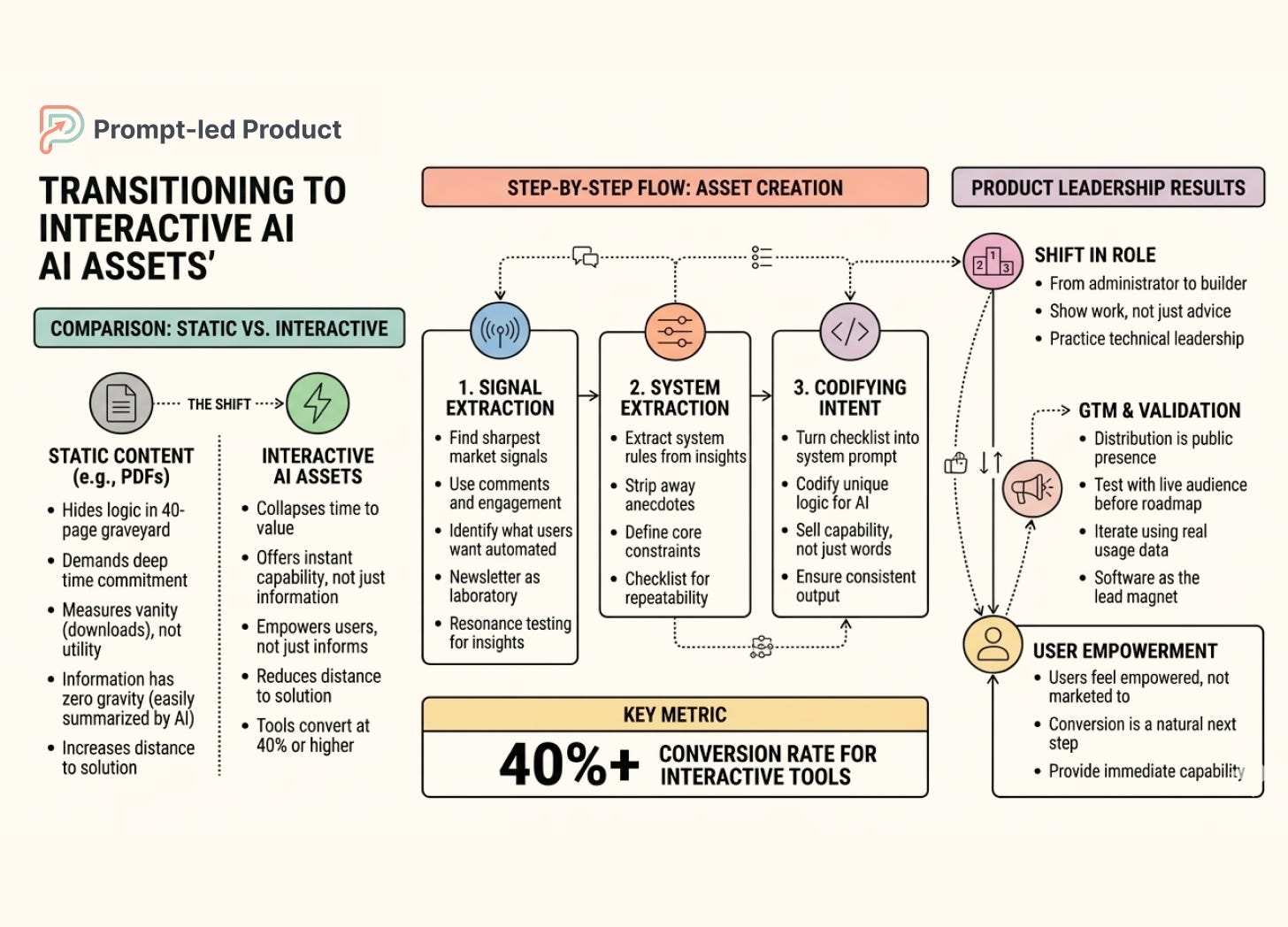
Carrie Loranger highlighted that static PDFs are conversion killers because they demand a deep time commitment. Interactive tools convert at 40% or higher because they offer instant gratification.
This does not mean the PDF is entirely useless, but its role has shifted. For a free lead magnet, a PDF is a barrier. But for a paid audience, an eBook generated by a tool like Karen Spinner becomes a curated record of value.
Think of it like this: the tool is for the moment of execution, and the PDF is for the moment of reflection.
You provide the interactive engine to solve the problem today, and you provide the high-fidelity PDF as a technical artifact of that result.
One gets them through the door. The other makes them stay.
But before you can architect an engine that people actually want, you need a way to find a high-fidelity signal.
Finding the Signal via Resonance Testing
This is where your newsletter becomes your laboratory. Take my collaboration with Timo Mason🤠 . On the surface, he is a writer. From a PM perspective, Timo is a specialist in Resonance Testing.
He uses his newsletter to find the sharpest signal in a market. When he identifies an insight that gets massive engagement, he is identifying a system that a specific audience is desperate to automate. By partnering with a writer who can find the signal, you remove the biggest risk in product management: building something nobody wants.
Timo finds the signal. I build the engine. This is a complete GTM pipeline that turns market research into a functional MVP in days.
But once you have the signal, you have to decide how much of the “how-to” your audience actually needs to see.
High-Velocity Learning and the 30-Second Proof
We are seeing a massive shift in how users want to consume education. Yana G.Y. from CREATIVE BiTES proved that high-impact “bites” work because users have no patience for twelve-module masterclasses. They want utility now.
This is why I am shipping my Vibe Coding mini-course series.
The strategy is the same as the AI tool: collapse the time to value. A tool automates the work. A mini-course sharpens the user’s ability to direct that tool. If your education is not high-velocity, it is just noise.
But to get them into a 20-minute course, you need the 30-Second Proof of Work video. A 30 second clip of the tool in action is the most powerful marketing asset you have. You record the input, show the process, and show the result.
People do not buy the AI part. They buy the result they can see with their own eyes. If they see the shortcut working in real-time, the conversion is natural.
The Software-as-a-Lead-Magnet Flywheel
The consensus among modern builders is clear: software and distribution are now bundled. Having the software without a way to distribute it doesn’t give you an edge anymore.
In my case, the newsletter is the growth tool that fuels the build, and the build is the proof that fuels the newsletter. But this applies to any product.
The Software-Led Flywheel:
Input: High-resonance signal from community/newsletter engagement.
Processor: Codified intent via System Prompts (The “Pause” vs. “Acceleration”).
Output: Instant capability (MVP) vs. Information (PDF).
Feedback: Usage-based behavioral data to drive the formal product roadmap.
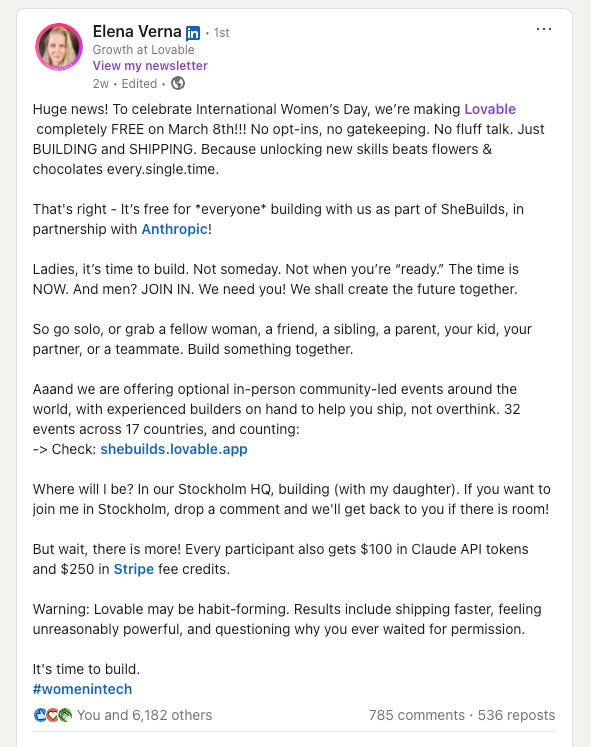
Just look at the partnership between Elena Verna and Lovable. Elena has the deep trust of the growth community (the Signal). Lovable provides the builder to turn her growth expertise into a functional tool (the Engine).
When Elena drops a tool, her audience doesn’t feel marketed to. They feel empowered. By the time they finish using the tool, they have already experienced the value of the platform.
The conversion isn’t a sale; it is a natural next step.
Software is becoming the lead magnet itself. You build at high volumes, test to find what hits, and then double down. This ends “blind building.”
People do not trust generic advice anymore.
They trust builders who show their work.
As a PM, this means your distribution is your public presence or your in-app engagement hooks. You show what you are building, you provide the tool as the entry point, and you use that usage data to decide which product actually deserves a full roadmap. To keep this loop spinning, you need a repeatable process to extract the system rules from your insights.
The Extraction Framework
To transition from a writer to a system architect, you need a repeatable way to turn a nugget of insight into an asset.
1. Signal Extraction
Do not guess what to build. Watch the signals in your comments. Look for the content where people ask how to apply your framework to their specific case. That question is the birth of a product.
2. System Extraction
Once you have the signal, extract the system rules. Strip away the anecdotes. What are the core constraints? If you were teaching a junior PM to do this task, what checklist would you give them?
3. Codifying Intent
This checklist is your system prompt. You are taking your unique intent and codifying it so an AI can replicate it. You are no longer selling words; you are selling the capability to produce those words correctly every time.
Now, you just need a place for that code to live.
The Vibe Coding Stack for PMs
You do not need a dev team. You need a weekend and a clear head.
Frontend: Lovable (UI/UX deployment).
Logic: Cursor (Prompt-led orchestration).
Architecture: A simple input box + one generate button.
The complexity lives inside your System Prompt. It ensures the output follows your specific framework every time. The result is a tool where the user enters raw data and gets a finished result in seconds. They gain a new capability the moment they click the button.
Real-World Proof: The Content Research Agent
Regardless of the specific tech stack, the goal is the same. Mia Kiraki 🎭 from Robots Ate My Homework is the benchmark. She didn’t write a guide; she shipped the AI Content Research Agent.
She didn’t give her audience homework; she gave them a machine that already has the skill. It is the difference between giving someone a map and giving them a self-driving car.
The Shift to Real Product Leadership
Most Product Managers are administrators of someone else’s vision. They spend their days writing tickets for features they did not invent.
When you build and ship your own AI assets, you are practicing Technical Leadership. You are proving that you can identify a market need, architect a solution, and deploy it to a real audience. This is the only way to lead in the era of AI.
The tools that win are always the ones that remove friction. Your audience does not want to be informed. They want to be capable. By providing an interactive tool, you are giving them that capability.
This is exactly what I did during the AI Advent Challenge. The magic was not in the daily emails or the long articles. It was in the prompts and frameworks that people could use immediately. I also used the community comments to find edge cases and iterated on the logic in real time.

If you want to dominate your niche, stop building libraries of content. Start building engines of utility.
Detect the resonance to find the signal. Use your technical logic to build the engine.
Are you still measuring vanity metrics like PDF downloads, or are you ready to see how users actually interact with your product logic?
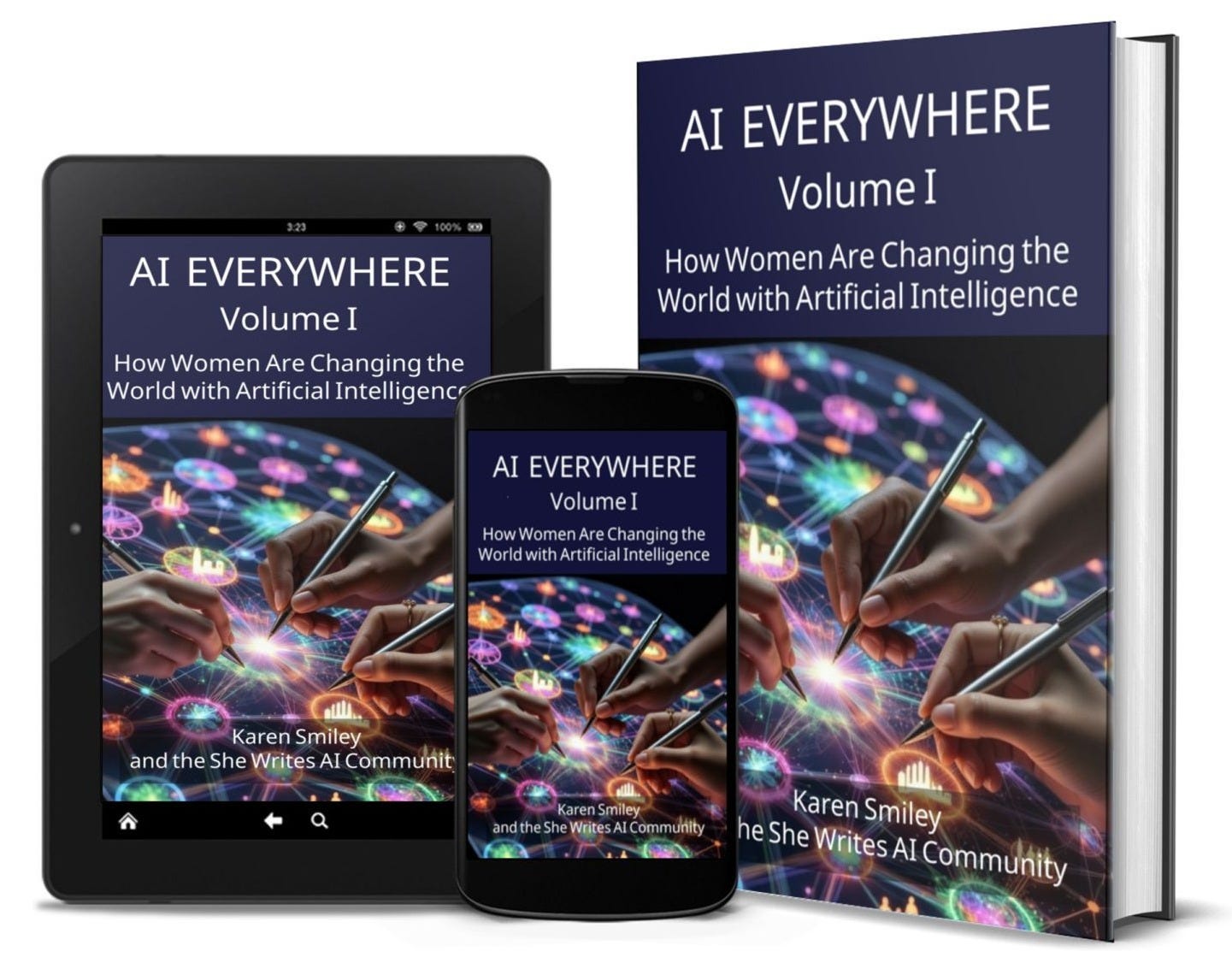
AI Everywhere Book Launch
I am excited to announce that the AI Everywhere book has been released. I had the honor of authoring a chapter for this book, focusing on the intersection of AI and practical execution.
Save The Date: Cozora AI Summit
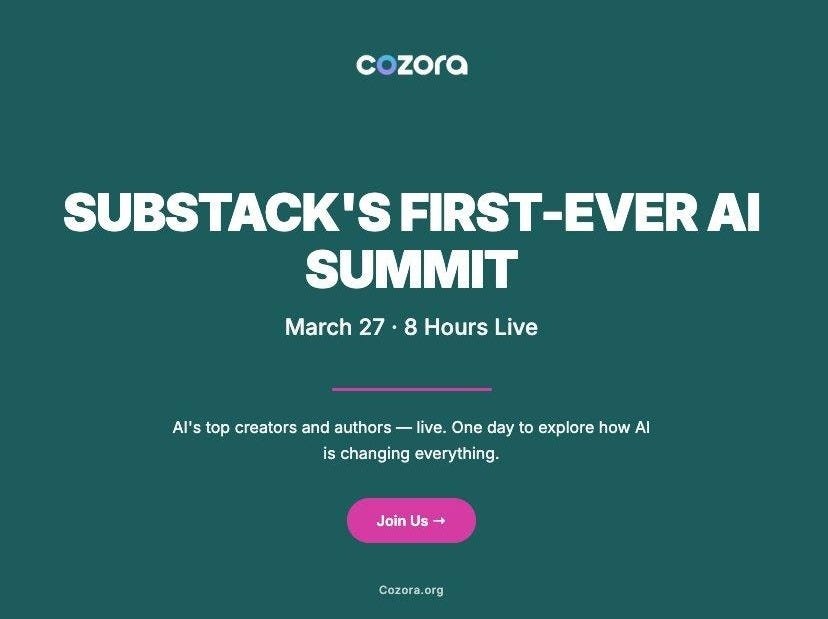
I will be part of Cozora’s AI Summit on March 27. I will be presenting a session on building with AI together with Dheeraj Sharma.
Proof Of Work
I have been tracking the community’s latest builds in the Substack chat. The caliber of technical execution is incredible. These aren’t just articles; they are architectural blueprints for the next wave of AI products:
The Deep Dives
Karo (Product with Attitude): A masterclass on Claude Cowork for power users. This is a vital resource for anyone scaling with plugins, sub-agents, and persistent memory. [Read the guide here]
Dr Sam Illingworth: Defining the framework for Critical AI Literacy. This piece is the foundation for moving beyond “acceleration” toward intentional product design. [Read it here]
Dheeraj Sharma: A technical deep dive into Claude Code. If you are building with hooks, agents, and
Claude.md, this is your documentation. [Read it here]
PDFs were never my thing and I’m happy I’ve never had to create them. Question, in the world when everyone is creating a product it’s definitely a challenge to find the signal and stand out. I’m thinking about what really brings value and what is unique from others creating it more and more lately. Great article Elena!
And most of those PDFs end up as one more unopenned file in the Downloads folder while just adding a row in the creator's excel for keep sending emails that won't be openned because the moment of curiosity or instant of need had passed for the consumer and now is on something else. Very insightful and actionable post, Elena!