


Check out the Build Series. Part 1 | Part 2 | Part 3 | Part 4 | Part 5

Last month I shipped a feature built almost entirely with AI assistance. The code passed every test, staging looked clean, and two days after launch a user reported that search results were returning duplicates under a specific edge case.
I traced it back to a function the AI had generated. The sorting behavior broke when two items shared the same timestamp, something our test data never triggered because the AI had generated the test data too.
The AI wrote the code. The AI wrote the tests. The tests passed. The code was still wrong. And if you are shipping AI-built features without a verification step in your product process, you are probably accumulating the same invisible debt right now.
If you are shipping AI-built features without a verification step in your product process, you are accumulating debt you cannot see, and this post walks you through exactly how I catch it. That is exactly what I audit for.
This Is An Industry Problem
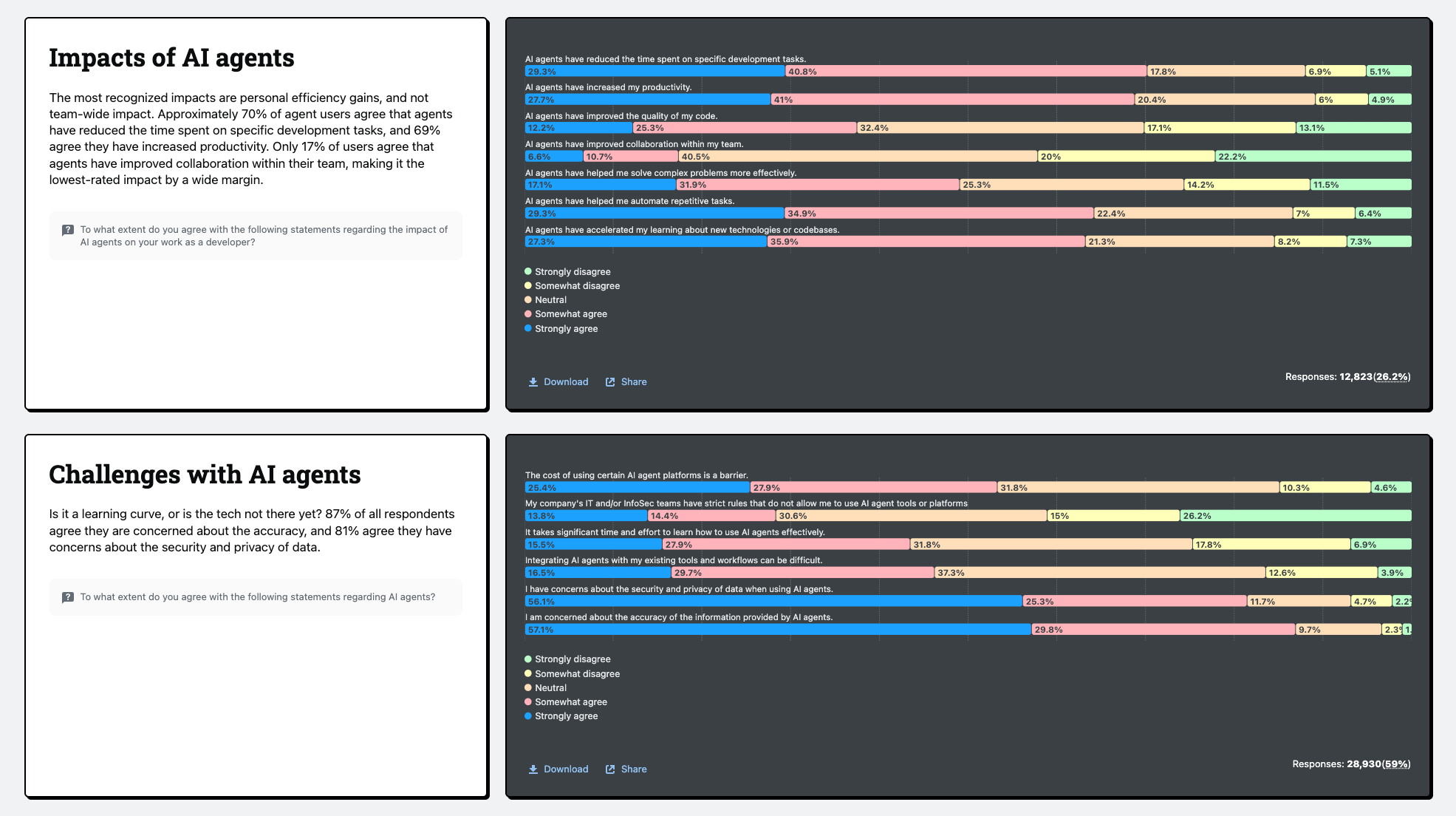
Lightrun’s 2026 State of AI-Powered Engineering Report found that 43% of AI-generated code changes require manual debugging in production, even after passing QA. The Stack Overflow 2025 Developer Survey puts it differently: 66% of developers say their biggest frustration is AI code that is “almost right, but not quite.”
And CodeRabbit’s State of AI vs Human Code Generation report analyzed 470 GitHub pull requests and broke down where AI code fails. The numbers:
✅ 1.75x more logic and correctness errors
✅ 1.64x more maintainability problems
✅ 1.57x more security findings
✅ 2.25x more algorithmic and business logic errors
The pattern is the same everywhere. The code looks clean. It reads well. It passes review. Then it breaks in production because real users do things the AI did not anticipate.
Why Your Workflow Misses This
Your sprint board shows the ticket as done. The PR was merged, CI passed, staging demo went fine. You marked it shipped.
But “shipped” and “working correctly in production” are not the same thing anymore. The gap between them is where AI debt accumulates, and your standard PM workflow has no checkpoint that catches it.
SonarSource’s 2026 State of Code Developer Survey (1,100+ developers globally) found that 96% of developers do not fully trust AI-generated code, yet only 48% always verify it before committing. Sonar calls this the “verification gap,” and it means your developers know the code might be wrong while half of them are not checking.
The Approach I Follow
Here is what I run before any AI-assisted feature ships:
✅ Separate AI-generated tests from verification tests. If the AI wrote the code and the tests, the tests only prove consistency, not correctness. I write at least three manual edge case tests targeting empty inputs, special characters, concurrent requests, and boundary conditions.
✅ Run a “stupid user” session. I spend 15 minutes using the feature wrong. Clicking things out of order, pasting long strings, using it on mobile when it was built for desktop. AI-generated code handles the happy path beautifully and falls apart on anything unexpected.
✅ Check the generated SQL and API calls directly. AI writes queries that work but are not efficient. I have caught queries that scanned entire tables instead of using indexes, invisible at 100 rows, catastrophic at 100,000.
✅ Diff AI output against your business rules doc. AI understands patterns, not your domain logic. I keep a one-page rules doc per feature area and manually check every rule against the code before shipping.
✅ Monitor the first 48 hours after deploy. Error rate spikes, response time changes, 500-level errors on new endpoints. If the error rate exceeds 2% in the first 48 hours, I roll back and investigate.
If your team is shipping AI-assisted features without a process like this, that is exactly what I help teams build. Three audit slots open this month.